The League: how it works
The League is fantasy football, except the players are your coworkers. Captains draft the floor into squads, every rep’s real numbers score for the squad that picked them, and squads meet in weekly matchups all season. The hook is the draft itself: someone picked you. Your Tuesday dials suddenly matter to teammates who never once looked at a leaderboard.
01The board in one look
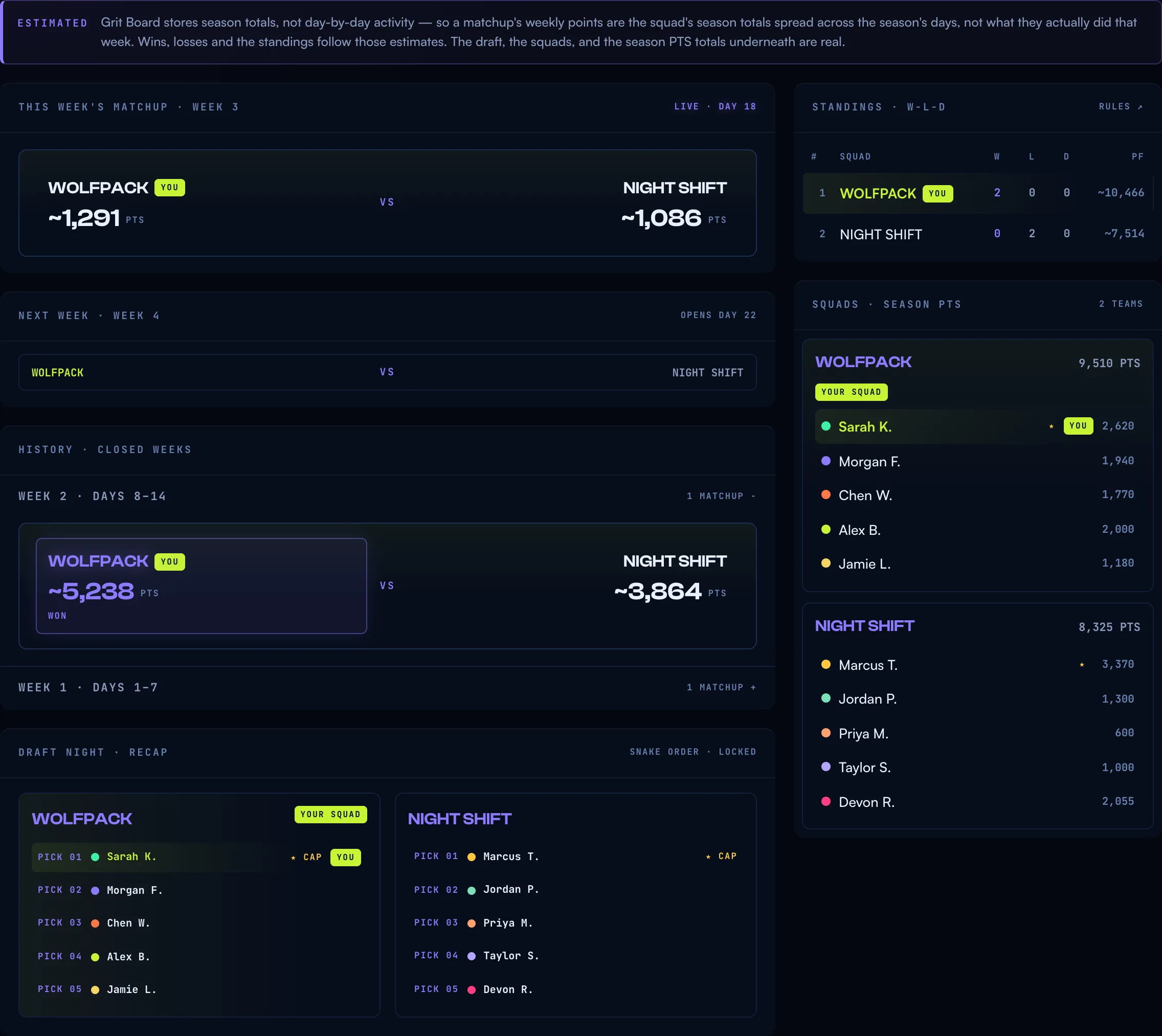
Left: this week’s matchup (live score), next week’s preview, the closed-week history, and the draft-night recap. Right: the standings table and each squad’s roster with season points.
02Draft night
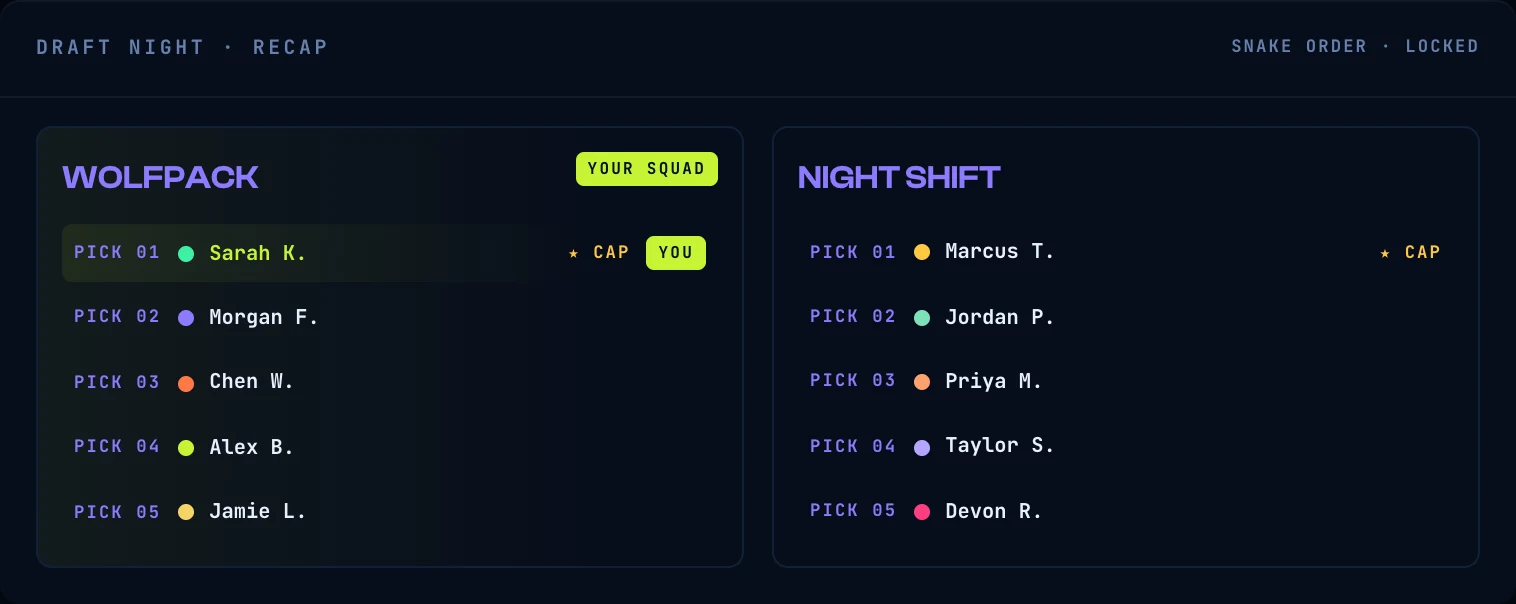
The league sets itself up from your roster: fewer than twelve reps makes two squads, twelve or more makes four. Captains are the top reps by season points at draft time, and each captain automatically leads their own squad — you always score for your own team.
- Captains rank their board. Before the draft, each captain can submit a ranked wishlist of teammates. It’s optional — a captain who skips it drafts by the current standings, so nobody can stall draft night.
- The manager runs the draft. One click, snake order — the lowest-ranked captain picks first, then the order reverses each round, which keeps the squads naturally balanced. Everyone gets drafted, down to the last name.
- The draft is permanent. Once it runs, it’s history — data re-uploads, roster shuffles, nothing re-draws the squads. The recap stays on the board all season, pick by pick.
03Weekly matchups
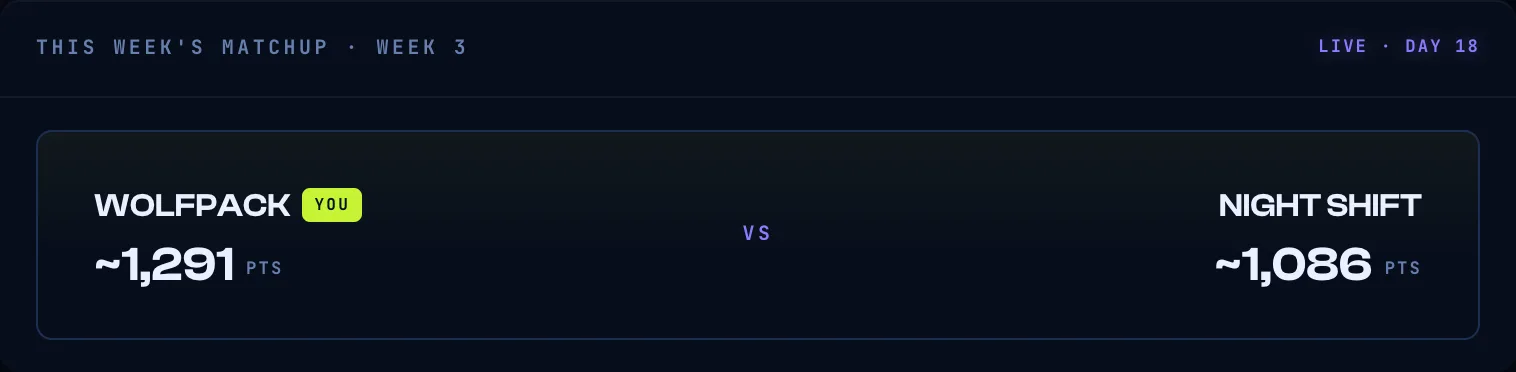
The season splits into seven-day weeks. A squad’s score for the week is the sum of its members’ points across that week’s window — the same weighted scoring as every other board, every squad starting the window from zero. Live weeks show a running score; when the week closes, the result is frozen and the winner takes a W.
Where the weekly score comes from. Grit Board stores season totals, not day-by-day activity — so on your data, a matchup’s weekly points are the squad’s season totals spread across the season’s days: an estimate of the week, not a diary of it. The board says so out loud — every estimated score wears a ~, and an Estimated note sits above the matchups. Wins, losses and the standings follow those estimates; the draft, the squads, and the season totals underneath are always real.
With two squads, they meet every week — a season-long grudge match. With four, the schedule rotates so every squad plays every week and faces every rival in turn. The standings table is win-loss-draw, with total points scored as the visible tiebreak.
04Squads, free agents, and departures
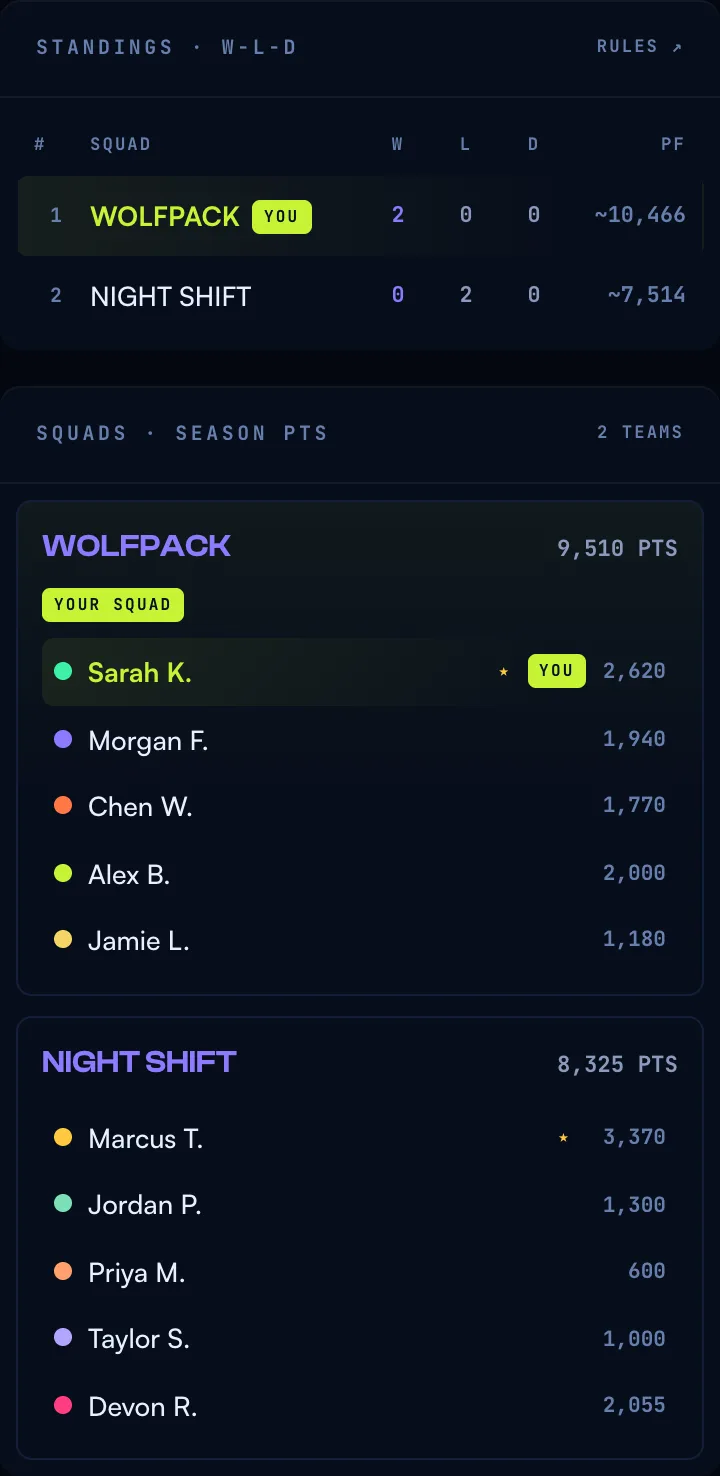
The squad rosters show every member’s season points — so a rep always knows exactly what they’re contributing to the squad. A few edge cases the board handles honestly:
Someone joins mid-season? They appear as a free agent — on the board, visible, but not in matchups until next season’s draft, where they’re fresh stock. Someone leaves? They stay on their squad exactly as drafted (the recap is history), score zero in live weeks, and their already-frozen weeks stand.
05Setup (managers)
- Have at least six players. Below that a league is a group DM. The board tells you if you’re short.
- Give captains a day to rank their boards. Optional but worth it — a submitted wishlist makes draft night feel like theirs.
- Run draft night once. It’s a season-long commitment, so run it when your roster is settled — early in the season, after everyone’s in the system.
06Common questions
“Our squads turned out lopsided — can we re-draft?” No — draft night is written once, and that permanence is what makes picks matter. The snake order plus captains drafting in reverse-standings order keeps it close on paper; a lopsided season is what next season’s draft is for.
“Do I have to do anything as a rep?” No. Your normal work scores automatically for your squad. That’s the design — the game runs on the numbers you already produce.
“Who picked the squad names?” The house — a fixed arcade-style pool (WOLFPACK, NIGHT SHIFT, FULL SEND, DIAL TONES), assigned by draft order.
“Why do the matchup scores have a ~ in front?” Because they’re estimates — see “Where the weekly score comes from” in section 03. Grit Board doesn’t yet store your team’s day-by-day history, so it marks a weekly split as an estimate instead of pretending it’s a measurement.
More questions? Write to hello@gritboard.io — a human reads it. Curious what the game feels like? See the League overview.