25 Sales Contest Ideas That Motivate the Whole Team (Not Just the Top 10%)
A sales contest is a time-boxed competition that rewards specific selling behavior. Most only fire up the reps who were already winning. Here are 25 formats — sorted by how you run them — plus how to design one your whole floor actually plays.

A sales contest is a time-boxed competition that rewards a specific selling behavior — dials, demos booked, deals closed, pipeline created — with recognition or a prize. Done right, it turns a flat week into a playable one. Done wrong, it hands a gift card to the rep who was going to win anyway and tells everyone else to stop watching.
That second outcome is the default. Most contests are a single leaderboard sorted by revenue, which means by Tuesday your bottom 70% has done the math, decided they can’t catch the top closer, and checked out. You didn’t run a contest. You ran a coronation.
This guide fixes that. Below are 25 contest formats grouped by how you actually run them, a prize list reps care about, and — the part most articles skip — how to design a contest that moves the middle of your team, not just the front.
Quick reference: which contest, when
| Contest type | Best for | Runs in | Scored on |
|---|---|---|---|
| Short sprints | A slow week, end-of-quarter push | 1 hour – 3 days | Activity (dials, demos) |
| Gamified formats | Sustained engagement, novelty | 1–4 weeks | Milestones, points |
| Collaborative | Culture, mentoring, ramp | 2–4 weeks | Team or paired improvement |
| Team-vs-team | Big quarterly goals | A full season | Combined output |
The rule underneath the table: match the contest length to the behavior you want. Activity bursts respond to short sprints; pipeline and skill respond to longer, story-driven formats. A six-week contest scored on dials just teaches people to spam the phone in week one and coast after.
Short-sprint contests (1 hour to 3 days)
Fast, high-energy, and cheap. Use these to break a slump or close a quarter.
- Most Nos. Reward the rep with the most rejections in a day. It sounds backwards, but it kills call reluctance — you can’t get told no without dialing.
- Power Hour. One hour, everyone on the phones, prize for most conversations. Pure activity, pure adrenaline.
- Jar of Cash. Add a few dollars to a visible jar for every meeting booked. Whoever books the next one “holds” the jar; whoever’s holding it at 5pm keeps it.
- Double Points Day. Pick a day where every logged win counts double. Great for clearing a stalled pipeline.
- First to Five. First rep to five demos (or five closes) wins. Simple, visible, over fast.
- Beat the Manager. You take a queue too. If a rep outdials you, they win — and your floor loves watching you grind.
- Lightning Round. A random 30-minute window announced with no warning. Most dials in the window wins.
Gamified contests (1 to 4 weeks)
These add a mechanic — points, chance, a story — so the outcome isn’t obvious on day one. That uncertainty is what keeps the middle of the pack playing.
- Sales Bingo. A 5x5 card of behaviors (“book a demo with a VP,” “revive a dead deal”). First to a line wins. Rewards range, not just volume.
- Sales Poker. Earn a playing card for each milestone hit; best five-card hand at month’s end wins. The randomness means a steady grinder can beat a streaky closer.
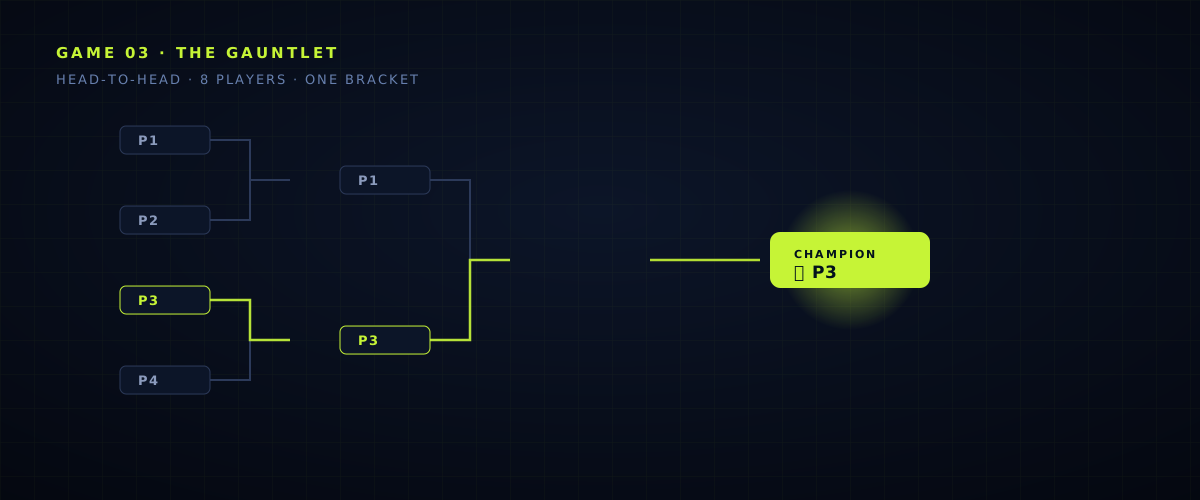
- Bracket / March Madness. Seed reps into head-to-head matchups scored on a KPI. Winners advance. Losing early doesn’t end your week if you add a redemption bracket.
- Mystery Box. Hit your number, pick a wrapped box. Some hold cash, some hold a sticker. The gamble is the fun.
- Streaks. Reward consecutive days of hitting an activity floor. Rewards consistency, which is exactly the habit you want.
- Points Store. Reps bank points for behaviors and spend them on rewards they choose. Turns one contest into an always-on economy.
- Trivia Ladder. Product or objection-handling trivia between calls — sharpens skill while it entertains.
This category is where software stops being optional. Scoring a bracket or a points economy by hand in a spreadsheet dies by week two. This is the entire idea behind The Gauntlet — eight players, three weeks, head-to-head rounds scored automatically in activity points, with a redemption bracket so nobody checks out after one loss. It’s a SPIFF with a story arc, run for you instead of by you.
Collaborative contests (2 to 4 weeks)
Competition isn’t the only motivator — and for the reps who’ll never top a leaderboard, it’s often the wrong one. These formats reward lifting others.
- Buddy Up. Pair a top performer with a newer rep. Score the pair on the junior rep’s improvement. Suddenly your best closer is invested in coaching.
- Objection Battle. Reps role-play the toughest real objections; peers or you score the responses. Builds skill and confidence off the live floor.
- Team Assist. Award points for booked meetings that get handed off and closed by someone else. Rewards the setters who never get the closer’s glory.
- Knowledge Share. Points for the best tip, script, or recording shared with the team that week. Turns tribal knowledge into team property.
- Comeback Player. Reward the biggest week-over-week improvement, not the highest absolute number. This is the single best way to re-engage your middle.
Team-vs-team contests (a full season)
For the big goals — quarterly pipeline, a product launch — split the floor into squads so individual ups and downs average out and nobody carries the loss alone.
- Squad Showdown. Two or more teams, combined output, season-long. Standings posted daily.
- Relay. Each rep owns one stage of the funnel; the team’s score is the whole chain. Exposes where deals actually stall.
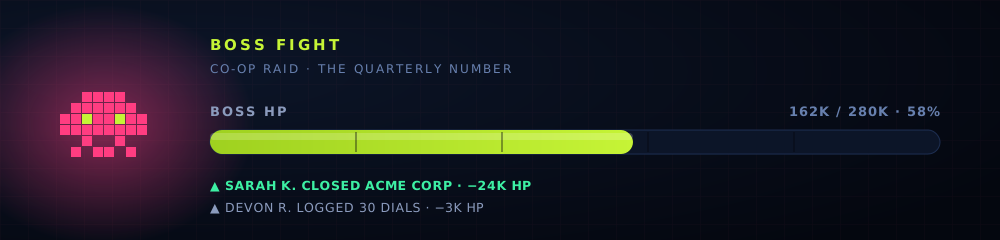
- Boss Raid. Frame the team’s quarterly number as a single shared enemy with a health bar that drops with every logged win. Co-op, not cutthroat. This is exactly Boss Fight — your quarterly target rendered as a raid boss the whole floor chips down together, with a finish line everyone can see.
- Region Wars. East vs. West, AM vs. PM shift — any rivalry that already exists.
- Draft Day. Managers draft mixed teams fantasy-style, so talent is spread evenly and every squad has a shot.
- Capture the Flag. A rotating “lead” that the top team holds until another team out-produces them. Constant lead changes keep it alive.
Sales contest prizes reps actually want
The prize matters less than the design, but a bad prize still kills a good contest. Money works; so does almost anything that signals status or buys freedom:
- Time: an early Friday, a late Monday start, an extra PTO day.
- Status: best parking spot, a trophy that moves desk to desk, “boss for the day” who runs the standup.
- Choice: let the winner pick — concert tickets, a nice dinner, gear, or cash. A tiered “winner’s choice” menu beats a single fixed prize.
- Team rewards: if a squad wins, a catered lunch or a half-day beats individual cash for building culture.
A note on cost: you do not need a big budget. The jar-of-cash contest runs on twenty bucks. Recognition — being seen winning in front of peers — is the actual reward. The prize is just the trophy.
How to run a contest that motivates the whole team
Here’s the part that separates a contest that works from an expensive one that doesn’t. Most sales contests only motivate the top 10% of a team — the reps already positioned to win. Everyone else opts out, and you’ve spent money to make your best rep slightly happier.
The fix isn’t a bigger prize. It’s changing what you score so more than one person can realistically win.
Four design rules:
- Score behavior, not just outcomes. Revenue rewards whoever has the hot territory. Dials, demos, revived deals, and week-over-week improvement reward work — and work is something every rep can control. This is the same reason The Quadrant plots reps on effort and results instead of one revenue number: it surfaces the grinder who’s doing everything right in a tough patch, who a pure leaderboard would bury.
- Create more than one way to win. Run a “most improved” alongside “most closed.” Use brackets, teams, or bingo so the outcome isn’t decided on day one. The goal is for your rep in 6th place to still believe Thursday matters.
- Make the score visible and live. A contest nobody can see isn’t a contest — it’s a memo. Standings have to update in real time and live where the floor already looks.
- Keep it short enough to feel urgent, long enough to feel fair. A day rewards luck. A quarter loses everyone’s attention. Most contests should run one to three weeks.
That third rule is where contests usually break for a manager: keeping a live, fair, tamper-proof scoreboard updated by hand is a part-time job, so the contest quietly dies. That’s the whole reason Grit Board exists — it pulls the activity straight from your CRM and turns these formats into games that score themselves, so you can run a real contest every week without becoming its scorekeeper.
Frequently asked questions
What are good sales contest ideas? The best ones reward behavior your team can control — dials, demos booked, week-over-week improvement — rather than raw revenue, which favors whoever already has the best territory. Start with a short activity sprint (Power Hour, Most Nos) or a gamified format (Sales Bingo, a bracket) so more than one rep has a real shot.
How do you run a sales contest? Pick one behavior to reward, set a clear time box (usually one to three weeks), make the scoreboard visible and live, and choose a prize that signals status or buys freedom. Most importantly, design it so your whole team can compete — not just the top closer.
What is the 3-3-3 rule in sales? It’s most often used as a prospecting research rule: before reaching out, spend about three minutes finding three relevant facts about the prospect to personalize the first touch. Some teams also use “3-3-3” as a time-blocking cadence (e.g., three hours of prospecting, three of selling, three of follow-up). There’s no single official definition — the spirit is concentrated, deliberate effort.
What are the 5 C’s of sales? There’s no one canonical list, but a common version is Connect, Convey, Convince, Close, and keep your Commitment — meet the buyer, communicate value, build the case, ask for the business, and follow through. Other versions swap in Confidence or Curiosity. Use whichever framing helps your reps remember to lead with the customer.
What do you do in a sales competition? Reps compete on a defined metric over a set period — anything from a one-hour dial sprint to a season-long, team-vs-team race toward a quarterly goal. Performance is tracked on a shared scoreboard, and winners earn recognition or a prize.
A good sales contest is the cheapest motivation tool you have — but only if the whole floor plays. Score the behavior, give more than one rep a path to win, and keep the board live. If you’d rather run a real contest every week than babysit a spreadsheet, that’s exactly what Grit Board turns your CRM data into — games like The Gauntlet, Boss Fight, and The Quadrant that score themselves.