Boss Fight: how it works
Boss Fight is the co-op game. Where the other boards rank reps against each other, this one points the whole team at a single enemy: your season target, rendered as a raid boss with an HP bar. Every deal logged, meeting booked, and dollar of pipeline added chips its health. Hit the target and the boss goes down — together.
01The board in one look
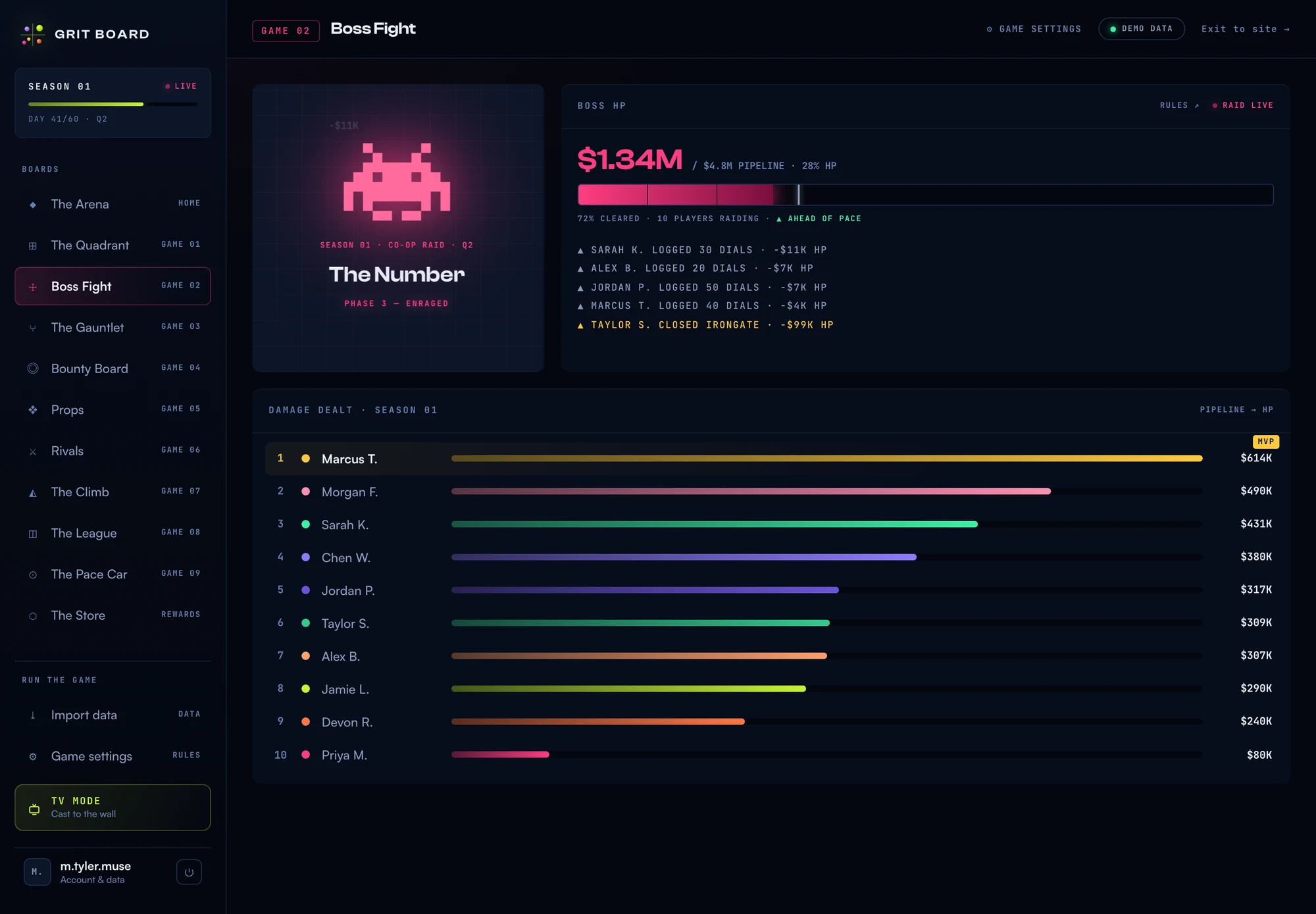
Left: the boss — “The Number” — with its phase. Right: its HP bar, how much the team has cleared, and the hit feed. Below: the damage leaderboard, showing exactly who has contributed what this season.
02How the raid works
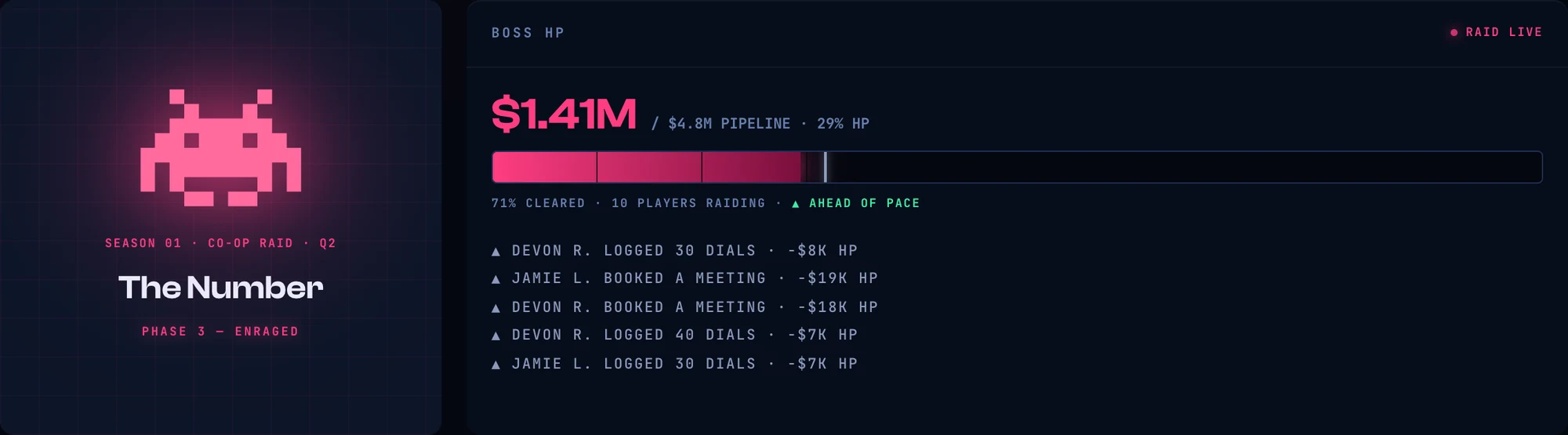
The boss’s HP is your team’s season target. Your manager picks one metric the team raids — pipeline dollars by default, but it can be meetings, deals, or any tracked metric — and sets the team’s number for the season. Damage is simply the team’s combined real total on that metric: if the target is $4.8M and the team has added $3.4M of pipeline, the boss has $1.4M of HP left. No conversion, no formula.
The small white pace tick on the HP bar marks where the boss’s health should be today for it to die exactly at season’s end. HP below the tick means the team is ahead of pace; above it, behind. The board says which, in words, right under the bar.
As HP burns down the boss escalates through phases — IT’S AWAKE at 75%, ENRAGED at 50%, FINAL PHASE at 25%. The phases are pure theater: they change the copy and the glow, never the math.
03Damage and the MVP
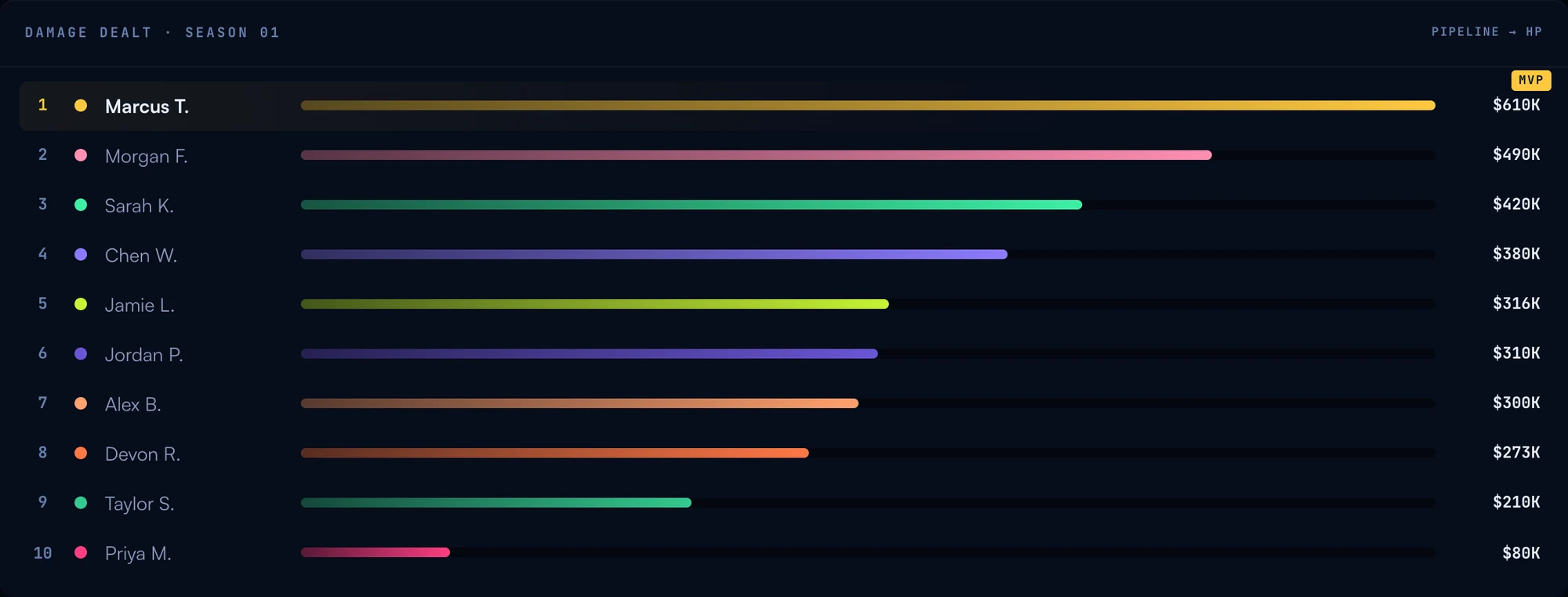
The raid is co-op, but contribution is visible: the damage board ranks every player by their season total on the boss metric, and the top contributor wears the MVP tag. Signed-in reps also see their own line above it — your damage, your share of the team’s total, and your rank — so the shared goal still has a personal stake.
04The boss ladder
Clearing the target is a real win — the moment the team’s total reaches the number, the boss dies. Then the ladder starts: the next boss spawns with 50% more HP (rounded to a clean figure), with a new face and a deeper shade of menace. Kills are counted on the board — ☠︎ 2 BOSSES DOWN THIS SEASON — and the current boss is numbered, so an over-performing team keeps a live goal instead of coasting on a finished one.
One design promise worth knowing: the first boss is exactly the target your manager set. It is never quietly inflated to keep the game going — beating it is beating the real number.
05Setting it up (managers)
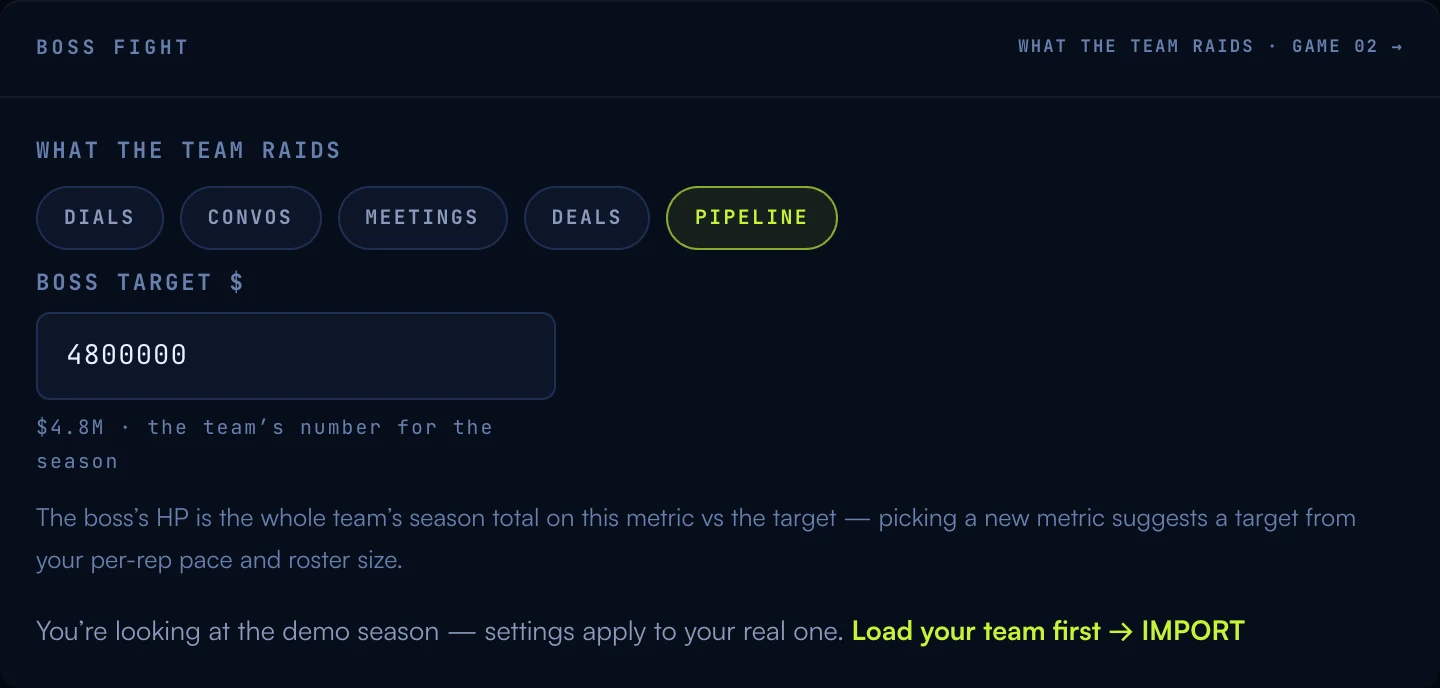
- Pick what the team raids. Any tracked metric works. Pipeline dollars is the default and a good fit for most teams — it’s the one metric that isn’t scored as leaderboard points, so the Boss Fight gives it a job.
- Set the boss’s HP. This is the team’s real number for the season. When you switch metrics, Grit Board suggests a target from your per-rep pace targets times your roster size — a sane starting point you can overwrite.
That’s the whole setup: one metric, one number. If your team’s Slack is connected, boss milestones get announced in the channel when they happen.
06Common questions
“Why is the demo board moving on its own?” The demo simulates a live raid so you can feel the game. With your real data the board is honest: every number is your imported truth, the only animation is the HP counting down to today’s real value, and nothing moves until new data lands (a CSV import, or a CRM sync).
“Does Boss Fight change how points are scored?” No. Damage is the metric itself — raiding with pipeline doesn’t award points for pipeline. The leaderboards and the raid read from the same season data and never interfere.
“What should the target be?” Whatever the team is actually on the hook for this season — quarterly pipeline goal, meetings-booked goal, revenue number. The game works because the boss is the real number, so set the one you already report on.
More questions? Write to hello@gritboard.io — a human reads it. Curious what the game feels like? See the Boss Fight overview for the live demo.